
I’m not sure I’ve heard the voice on the other end of the phone correctly, and I ask him to repeat himself. It’s not my hearing; he says he wants me to come all the way out west to the Heinlein Space Center to take a look at something. I remind him politely that I’m an ornithologist, not an engineer.
He interrupts me. “I know, I know, I saw your website. You specialize in endangered marsh birds, don’t you? I’ve seen a northern piper out here. A pair. They’re nesting.”
I don’t believe him at first. Northern pipers have been extinct for years, but still, he might be thinking of the common sandpiper, which is critically endangered and still worth a visit. Then he pings me a picture that he’s taken, and I agree to come straight away.
I’m bundling things into my travel bag when Emilie appears in the doorway.
“What are you doing?” she says, confusion overpowering the annoyance in her voice. “It’s almost midnight. Aren’t you coming to bed?”
I hold out my phone to show her the messages I’ve received. She reads them, frowning. I see her thumb swiping down the screen, and her head tilts slightly as she examines the picture.
“It looks like a northern piper. They’re extinct, Em. Or we thought they were. This is big. Like, career big. I’m going to catch the first loop out there in the morning to take a look.”
Emilie is still looking at the photo of the bird, and I can tell that she’s not getting what the fuss is about. “That’s great,” she says, “but you do remember Jack is coming home tomorrow, right?”
I hadn’t forgotten. “I know. I should be home before he gets here. Besides, he’ll like this. One less reason to be mad at me.”
She smiles and passes me my phone back. “All right. Just try not to wake me in the morning.”
It’s only a few minutes before I follow her up, but I lie awake long after Emilie begins to snore, her breathing shifting into a lower gear. My mind is racing with the impossibility of what I’ve been sent.

The hyperloop only goes out as far as Portsville, so for the rest of the way I have to rent a pedal bike. They put a bus service on when the shuttles are loading up passengers to head off-world, but the Heinlein Space Center doesn’t have a launch scheduled for several weeks. Business has slowed. Most of the people who are going to leave Earth have already left.
It’s a good few miles to pedal, so I have time to think. An actual northern piper sighting, no less a nesting pair, would be incredible. Although they’ve established small populations in some of the colony worlds from re-engineered tissue samples, we’d thought they were extinct in the wild here on Earth.
The spaceport starts to come into view through the dust. The launch tower looks naked with no shuttle clasped upright beside it, and the surrounding maintenance buildings look tiny, like dollhouses. They shimmer in and out of view with the heat, stabilizing as I get closer.
Pearson meets me at the checkpoint, the solo entry to the launch site. He’s the one who called, and he looks younger than I imagined from hearing his voice. He’s sporting one of those retro 2030s-style moustaches, and he shakes my hand vigorously, seeming surprised that I decided to come all this way. I feel the bones of his hand beneath the skin, and I’m conscious of my own plump fingers.
“Thank you,” he says, in lieu of hello.
“No, thank you,” I say. “Is there anywhere I can…” I tip my head towards my rental bike.
“Uh…” he looks around. “You can probably just leave it here. No-one really comes out here outside of launch days.”
He has a point. The land around the Heinlein Space Center is a desert of human habitation, and in recent years, not far from being an actual desert. Sans the little town of Portsville clustered around the hyperloop terminal, there’s probably not a soul for fifty miles. The dried-up marshland is devoid of features, besides the rippling of the wind through the seas of yellow-brown stems.
I lock it up to the chain-link fence surrounding the site, just in case. The checkpoint guard waves us through, giving a nod to Pearson, and I climb into his vehicle. Whatever it is, it looks like a cross between a quad bike and a golf buggy, one of those service vehicles that carry groundskeeping staff around big estates and industrial complexes.
“So whereabouts is the nest?” I say as we set off. The vehicle’s battery is quiet, the wind nonexistent, and I don’t need to raise my voice.
Pearson points over to the launch tower.
“Really?” I say. “That’s unusual. Normally, pipers never made nests high up. They usually just scratched out a little hole in the ground or tucked themselves into crevices somewhere.” I realize I’m still talking about the species in the past tense.
“Sorry, I don’t mean up the launch tower,” Pearson says. “They’re underneath it.”
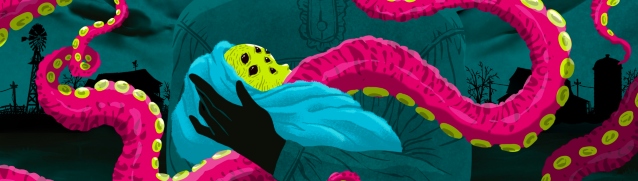
As we get closer and the tower grows taller before us, I can see the huge exhaust runoffs set into the ground. Eight deep trenches, big enough to swallow buildings. They grasp outwards in every direction like the imprint of some gigantic splayed octopus, designed to funnel the smoke and flame away from the shuttle as it unshackles itself from the Earth. We pull up beside one of the trenches and Pearson clambers over the low fence that runs alongside, gesturing for me to follow.
I inch close to the edge, trying not to look directly down. Then I see it. On the far side of the trench, halfway down, there is a narrow groove set into the wall that runs horizontally along the length of the channel. There’s a speck, a clump of something, crammed into that gap.
Pearson goes to hand me his binoculars, but I already have mine out. At 5x I can clearly see the outline of the nest; at 10x, the curve of the piper’s head is clearly visible poking out above the mess of dry grass and leaves. I’m always amazed, in contrast to the branch-and-twig nests that most birds construct, at how it manages to stay together. I’m reminded of our first house, how it had rattled and shaken during storms while the three of us slept together in one room for warmth. Happier times, somehow. The sound always seemed to send Jack to sleep, and when we’d moved to our new house, he’d struggled with the silence, the quiet solidity of the place, where a room of his own had been inflicted on him.
“Why’d you think they’re down there?” Pearson says, and I realize I’ve been daydreaming.
“I’m not sure,” I say. “It’s not usual behavior. Maybe they feel safe down there. Maybe because it’s cooler.” The thought makes me notice how my shirt is sticking to my back, despite the time of year.
The piper pokes its head up for a moment and I catch a glimpse of the distinctive white bands around and beneath its eyes. It’s a female northern piper, no doubt about it.
“You were right,” I say. “Bloody hell.”
Pearson claps me on the back, making me lose my focus through the binoculars for a second. “I knew it was. I’m a big bird nerd.”
“Well, you’ve got a good eye for this.” A thought, sudden and sharp, strikes me. “When’s the next launch?”
“Oh, a couple of weeks.”
“No,” I say. “When exactly?”
Pearson checks his phone. “Friday after next. The 30th.”
“And how long has this nest been here?”
He shrugs. “Not sure. I noticed it on Monday and called you yesterday.”
I can’t see into the nest from our position, to know for sure if the eggs have hatched, and my camera drone is on loan with a colleague. Regardless, I try to do the math in my head. Most pipers lay three or four eggs, and incubate them for three or four weeks. The chicks can usually stagger about pretty quickly, but these ones won’t be able to leave until they can fly, due to the location of the nest. That adds a few more weeks before they can get to safety.
It’s not good.
“Is there any way I can get down there?” I say.
Pearson laughs, then sees that I’m serious. “Oh. Oh, no way. I mean, even if you could, I would not be allowed to do that. I’m pushing my luck just letting someone get this close to the tower.”
“You can’t send a maintenance guy down there?”
“I already asked. Not for a bird, they said.”
The groove in the trench wall is probably around twenty feet down from ground level and another thirty from the trench floor. I can’t exactly reach down and scoop the nest out to safety myself.
While I’m taking photos, Pearson gets a call and after a moment, waves me back to his vehicle. I take a final look at the nest, wedged into a quiet groove in the wall that will be drowned in fire before the month is out, and pull myself away.
There’s an issue with the hyperloop between Portsville and Huntington, so it takes me the rest of the day to get home. The air index crosses the border between red and black as I turn the corner to our street, and I adjust the straps of my face-filter to make sure the edges are snug.
There’s a wave of smells as I enter the front door and peel off my filter, hanging up my coat and shoes. Emilie’s been cooking. It smells like chicken or turkey, actual meat, an impossible extravagance for a normal weekday. I wander through into the kitchen to find a young man leaning against the countertop, a glass in hand, talking to Emilie. It’s Jack, but for a moment I don’t recognize him; he’s a full two years older than the last time I saw him, somehow even taller and slimmer than the son I remember. A short, scruffy beard stretches from ear to ear.
“Jack?” I say. Then he grins and I go in for a hug, clapping him on the back. For the first time, I have to reach up to do so.
“Hey, Dad,” he says as we separate.
“I bought a chicken,” Emilie butts in. “To celebrate. Jack won’t be having any, obviously, but still.” She gives me a look that could mean a hundred things, but I read Why didn’t you tell me he’d gone vegetarian? I try to beam back to her, telepathically, that I didn’t know, either. It comes out as a weak smile.
“Oh, lovely,” I say. I look over at the bird roasting in the oven. It’s small for a gallus domesticus, and not quite the right shape, and I wonder if she’s been scammed. I push the thought away, not wanting to burst her bubble.
Over dinner, Jack tells us about his work. He’s been running with the Red Cross since he left home at seventeen, and his assignments over the last five years have taken him to New Palestine, Indonesia, and the other half of the Divided States. I hate to think what he’s seen.
“Enough about me, though,” he says, putting down his knife and fork. “What about you two?”
I look across the table at Emilie. Our son is so young and yet our jobs, our careers, already seem trivial in comparison. How am I supposed to tell him that I’ve been pottering around dried-up wetlands monitoring oystercatcher numbers for the last few months, while he’s been delivering lifesaving aid to thousands of displaced people in Europe? I can see Emilie’s face processing a similar train of thought, trying to think of something exciting to say about Regional Infrastructure Management, when the answer comes to me.
“Actually, I’m just back from quite an interesting visit,” I say.
“Oh?”
“There’s this bird that we thought was extinct. A rare type of sandpiper. Only there’s a nesting pair up by the Heinlein Space Center. A guy sent me some photos and I went up there today to corroborate. Here,” I say, bringing up my own photos on my phone and showing him. Emilie cranes her neck over to get a look as well.
“Wow,” Jack says. “That’s cool.”
I actually believe that he means it. We’ve butted heads over work in the past, about the supposed meaninglessness of our careers in the face of everything. I get a free pass, sometimes, when I’m tangentially involved in endangered species preservation. His mother’s work is more harshly inspected, though, and he’d accused her once of just moving money around for billionaires, instead of doing something useful. That hadn’t been a pleasant evening.
Sighing, I shake my head. “The thing is, they’ve built their nest under the launch pad, essentially. They’re going to get incinerated when the next shuttle launches.” I’m suddenly conscious of the aroma of the cooked chicken, if it is a chicken, wafting up from my and Emilie’s plates.
“Oh. Can’t you move the nest?”
I sigh. “You’d think so. But they won’t let a civilian like me go down there. Too dangerous, apparently. And they won’t go to the trouble of getting one of theirs to do it for the sake of a bird.”
“Well…won’t they just fly away?”
“I hope so,” I say. “Either of the parents might stay back, though, trying to protect the nest. Obviously, it’ll mean certain death for them, but they won’t be able to leave while their chicks are there.”
I look up and Emilie is glaring at me in a stop talking kind of way. I frown, think back over my words, and realize my mistake. Jack doesn’t seem to have reacted.
“Huh,” he says. “That’s…really sad.”
It’s silent for a while as we resume eating. I wouldn’t categorize it as a frosty silence, but the temperature has undoubtedly dropped. The state of the world is a touchy subject. I’ve strayed dangerously close to a repeat of the last time we’d seen him, when he’d come back from the remaining islands of the Pacific States. I’d bought the three of us tickets off-world, a one-way trip from the Niven Space Center, set for one of the new colonies around Sirius. An unimaginable chance at a new life.
He’d lost his mind.
I can’t believe you’d do this without asking me first.
Jack, please. Look around you. Everything is falling apart. The oceans, the atmosphere, the forests, the rivers, the cities, and it’s only getting worse…
The people are falling apart, Dad. The people. They need us.
There’ll be people to help on Sirius.
Not like here! How can you not see that?
Please, I’d said, on the verge of begging. Emilie had joined me. There was no future here for us, or Jack, or even Jack’s children, if he chose to have them, but there was hope out there amongst the stars.
He told us to go, screamed that we didn’t have to stay behind for him, but he knew as much as I did that we couldn’t leave without him. Two days later, the shuttle launched from the Niven Space Center without us, and Jack left for Greenland to help with their newest refugee crisis. He’d barely had a chance to unpack.
After dinner, Emilie and I wash up together. I dry the dishes and put them away almost as fast as she can put the clean dishes on the draining board. Jack is upstairs, on the phone with one of his colleagues.
“I want to say something,” I say. “So badly. I want to try again. Convince him.”
“I know.”
“He’s seen so much. He has to realize it’s all hopeless.”
“I think that’s why he can’t leave,” Emilie says, and as she turns to me I can see her eyes glistening with unhatched tears. “God dammit, we raised him to be a good person, and it’s backfired.”
“I’m so proud of him.”
“Me too.”
She leans in and puts a wet, soap-bubbled hand around my waist, clinging to me.
The next morning, Jack is gone. He’s left a note on the little table by the front door, but neither of us have been able to open it yet.
My internal plea for further access to halt the launch or retrieve the nest has fallen on deaf ears. The department is stretched too thin, and the few replies I’ve received seem worn down, run-out. Pearson is adamant he can’t do anything, and none of the other staff at the spaceport are responding to my messages.
As I change the sheets in the guest room—Jack’s room—there’s an alert on my phone. It’s from Pearson. Hey, doc. Sorry I couldn’t be more help, but thought you’d get a kick out of this. He’s been back to the trench, and has attached a video. It’s the male piper in flight above the tower. I recognize it instantly as he zooms in; the smooth, white breast, the striking silver-brown mottling of its wings, and the dark bands around its eyes. Its beak is characteristically long, perfect for probing in the wet mud. It’s beautiful, but not celebrity-status beautiful enough for the department to spend precious resources to save it. It’s no golden eagle or puffin. Species are being lost every day, it seems, and there are only so many places we can be.
The video is still playing. The bird soars overhead for a moment, Pearson’s camera smoothing out the video as he follows it, before dropping down into the trench. There’s the best part of a minute of birdless video as Pearson hikes over to the edge before aiming the camera back down. As he does, I can see the male perched next to the nest. The female stands up, fully visible now, and hops out. The male quickly takes her place. They’re doing this in shifts—it’s her turn to go out and eat. I smile, thinking of when Jack was small, and Emilie had worked nights while I worked days, exchanging rushed kisses on the doorstep at dawn and dusk. The female leaps from the ledge and darts out of view, and the video ends.
I send Pearson a sincere thank you and download the video. I still have to finish my report on the sighting, and it’ll be perfect to add as supplementary material alongside my other photos. It’ll be nice writing about a species becoming un-extinct, for once.
Nesting pair confirmed, I read from my notes, both by photo/video evidence and visual confirmation. Both appear to be healthy and well-nourished, although are exhibiting atypical nesting behavior, possibly due to climate irregularities. As a result of the nest placement, as noted earlier, it is extremely unlikely that the eggs/chicks will survive, but the presence of this pair indicates a possibility of other wild specimens.
I stop reading and watch the video again. The father settles into the nest as the mother stretches herself, flaps her wings, and flies away. I think I see a twitch of movement just over the top of the nest, perhaps a hatched chick straining to stand, but it’s probably just wishful thinking; the wind rustling the dry grass woven into the roost.
A couple of weeks pass. I take the day off work, telling Emilie I’m at an ornithologist’s conference, and catch the loop back down to Portsville. I’m not sure why I lied to her, but something about what I’m doing embarrasses me. It’s the day of the launch. I rent another bike and make my way down the main road towards the gates, passing the shuttle bus as it comes back the other way, empty. It’s oppressively, unnaturally hot, and the sky is vast and cloudless.
I stop a few hundred meters before the checkpoint. I know the guard won’t let me through again, and he couldn’t on launch day, even if he wanted to. It’s as close as I can get. Luckily, it’s a clear day, and the shuttle is sharp-edged and defined against the sky, gleaming a bright, deathly white. Lights are flashing all around the launch tower, and long metal arms are unclasping themselves from around the shuttle. It’s almost time for them to leave.
I should have pushed Jack harder. Pushed again. His feelings be damned. I should have made him. But it’s too late. We’re past the point of no return; every day he spends here only exposes him to more horrors, makes his resolve firmer.
The rumbling of the engines begins. I know I can’t see from this distance, but I strain to make out any detail, to spot any specks flying out of the trench, fleeing skyward.
I want them to fly free. They can have new babies, make another nest. Out of the trench, there’ll be a safe place for them. But I know, I know, I’m asking the impossible. There’s not a chance that they can leave. The rocket boosters ignite.
 |
Dan Peacock is a sci-fi and fantasy writer from the UK. His stories have been published in F&SF, Cast of Wonders, and Metastellar, among others. You can find his work at danpeacockwriter.com. He lives with his long-suffering partner and daughter, along with a second-hand cat that doesn’t work properly. | |
One thought on ““Take Flight” by Dan Peacock”